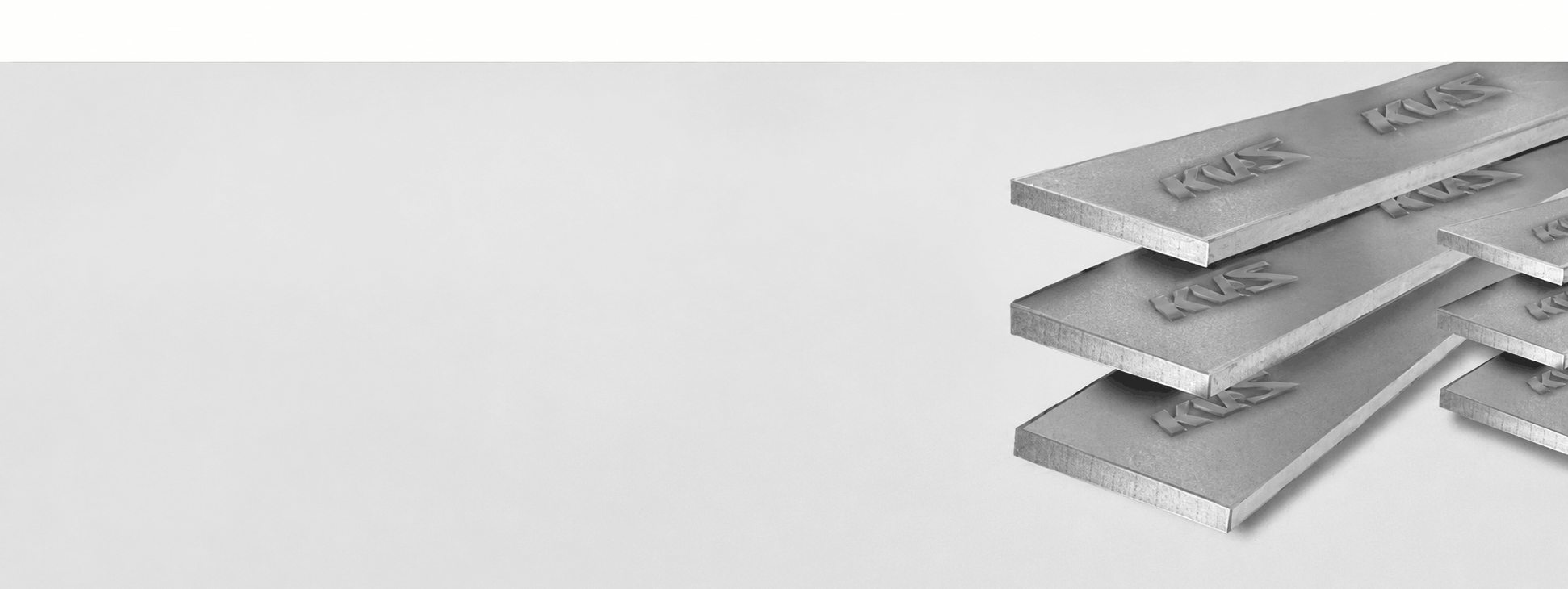
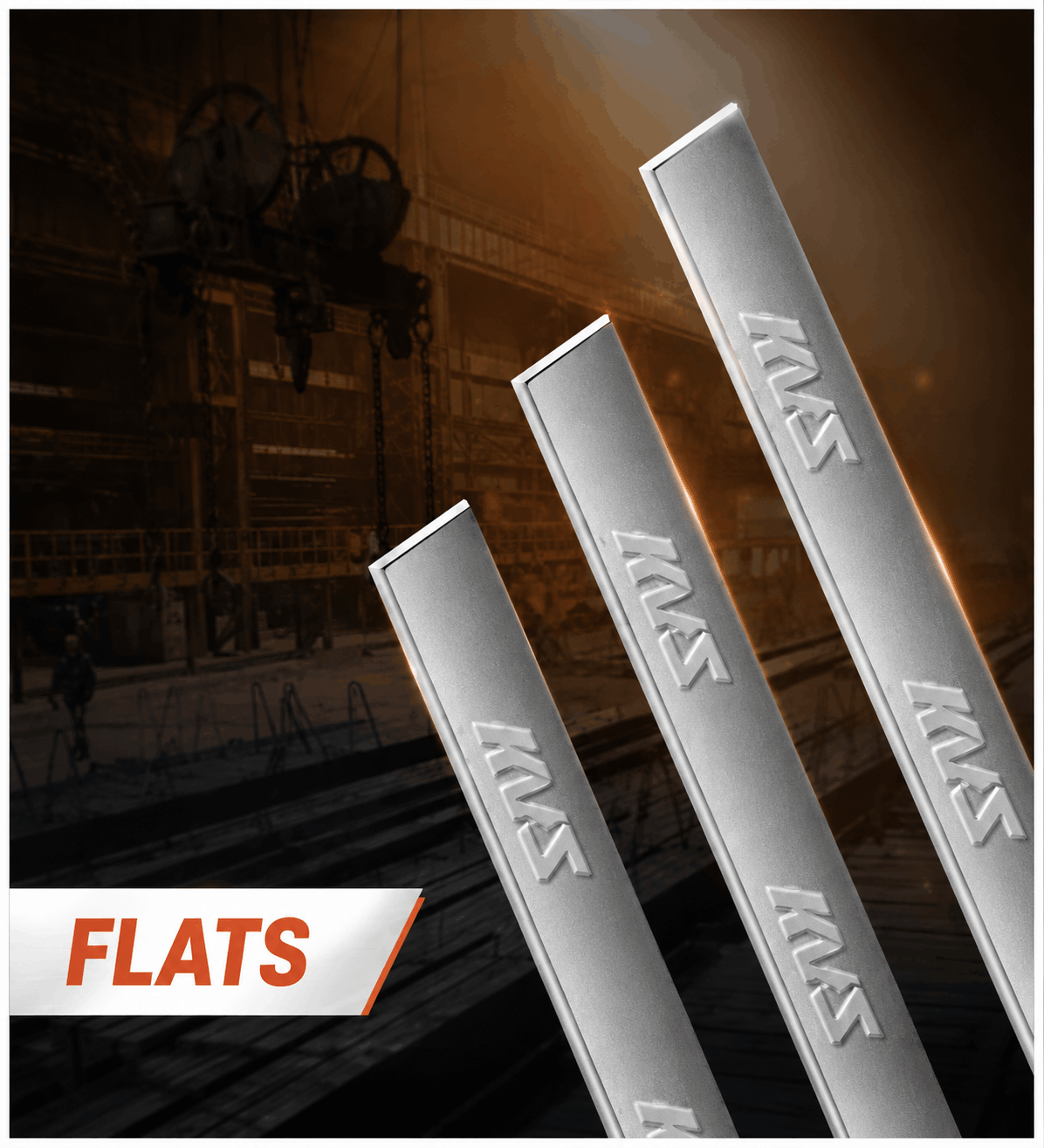
What are Mild Steel (MS) Flats, and where are they commonly used?
MS Flats have a rectangular cross-section with flat edges, widely utilized in general engineering purposes such as grating manufacturing, cable trays, automobile and auto-ancillaries, truck trailers, and more.
Do KVS MS Flats conform to industry standards?
Yes, KVS MS Flats adhere to BIS specifications IS:2062 and BIS:15911, ensuring compliance with essential physical, mechanical, and chemical tests.
What characteristics define KVS Mild Steel (MS) Flats?
KVS MS Flats are defined by consistent chemical composition, uniform thickness, smooth surface finish, and reliable mechanical strength suited for structural and fabrication work.
How do KVS MS Flats contribute to cost-effective solutions in construction?
Their precise tolerances reduce material wastage, ease of fabrication cuts labour time, and long-lasting durability lowers maintenance costs over the product lifecycle.
How are KVS Mild Steel (MS) Flats manufactured?
They are hot rolled from quality billets under controlled temperatures, then cooled, straightened, and cut to length before final quality inspection.
What makes KVS MS Flats a reliable choice for construction needs?
Stringent quality checks at every stage, adherence to BIS standards, and consistent supply reliability make KVS MS Flats a trusted choice for builders and fabricators.
What sizes and dimensions are available for KVS MS Flats?
KVS offers MS Flats in a wide range of widths, thicknesses, and lengths to match diverse engineering and fabrication requirements.
Are KVS MS Flats customizable according to specific engineering needs?
Yes, KVS can tailor dimensions and specifications of MS Flats based on the customer's specific project or engineering requirement.
In which industries or applications are KVS MS Flats commonly utilized?
They are widely used in grating manufacturing, cable trays, automobile and auto-ancillary parts, truck trailers, general fabrication, and structural engineering.
Can KVS MS Flats withstand different environmental conditions?
Yes, their composition and surface finish provide good resistance to atmospheric corrosion, making them suitable for varied environmental conditions.